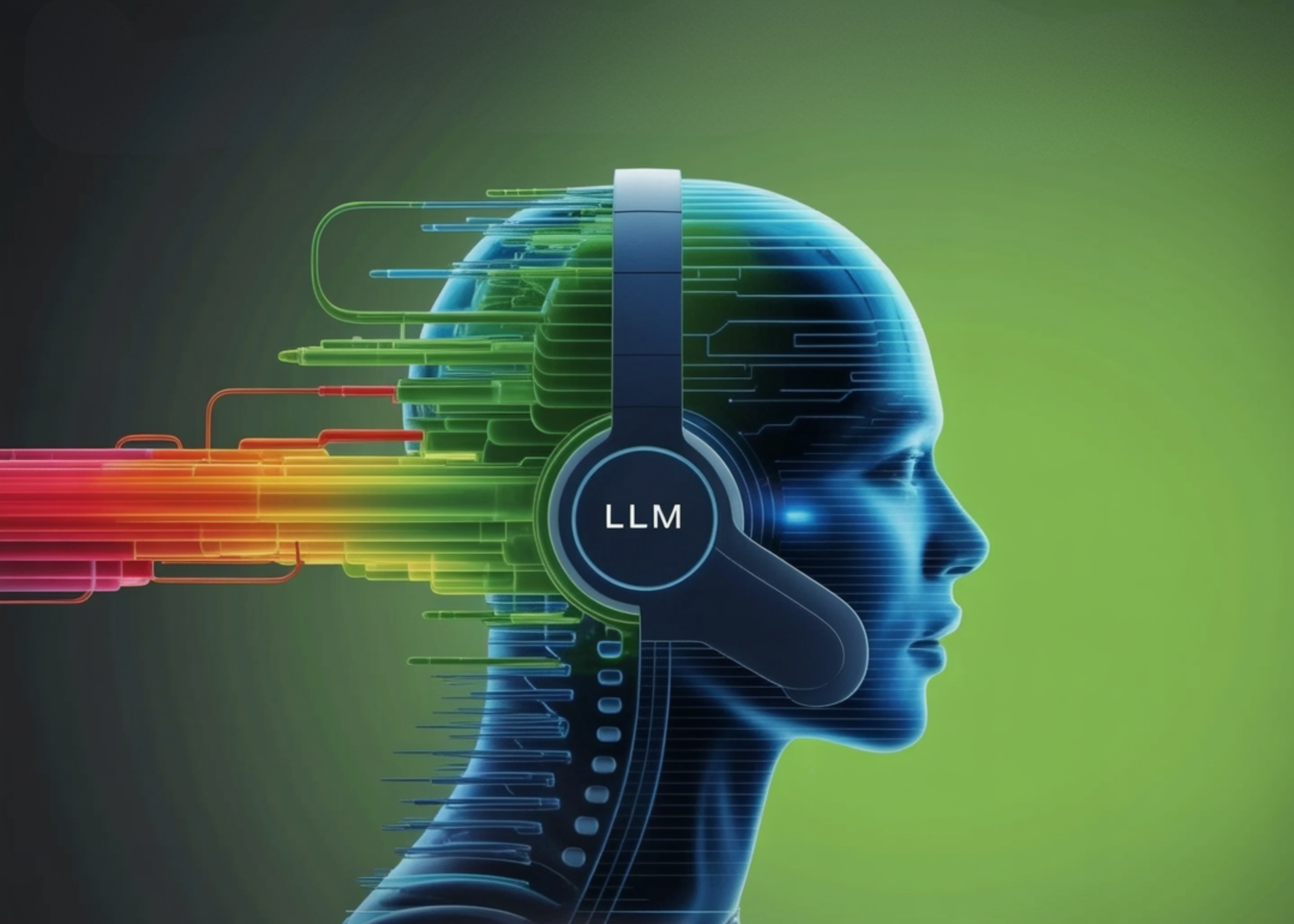

In this tutorial, we build an end-to-end streaming voice agent that mirrors how modern low-latency conversational systems operate in real time. We simulate the complete pipeline, from chunked audio input and streaming speech recognition to incremental language model reasoning and streamed text-to-speech output, while explicitly tracking latency at every stage. By working with strict latency budgets and observing metrics such as time to first token and time to first audio, we focus on the practical engineering trade-offs that shape responsive voice-based user experiences. Check out the FULL CODES here.
import asyncio
import numpy as np
from collections import deque
from dataclasses import dataclass
from typing import List, AsyncIterator
from enum import Enum
import matplotlib.pyplot as plt
@dataclass
class LatencyMetrics:
audio_chunk_received: float = 0.0
asr_started: float = 0.0
asr_partial: float = 0.0
asr_complete: float = 0.0
llm_started: float = 0.0
llm_first_token: float = 0.0
llm_complete: float = 0.0
tts_started: float = 0.0
tts_first_chunk: float = 0.0
tts_complete: float = 0.0
def get_time_to_first_audio(self) -> float:
return self.tts_first_chunk – self.asr_complete if self.tts_first_chunk and self.asr_complete else 0.0
def get_total_latency(self) -> float:
return self.tts_complete – self.audio_chunk_received if self.tts_complete else 0.0
@dataclass
class LatencyBudgets:
asr_processing: float = 0.1
asr_finalization: float = 0.3
llm_first_token: float = 0.5
llm_token_generation: float = 0.02
tts_first_chunk: float = 0.2
tts_chunk_generation: float = 0.05
time_to_first_audio: float = 1.0
class AgentState(Enum):
LISTENING = “listening”
PROCESSING_SPEECH = “processing_speech”
THINKING = “thinking”
SPEAKING = “speaking”
INTERRUPTED = “interrupted”
We define the core data structures and state representations that allow us to track latency across the entire voice pipeline. We formalize timing signals for ASR, LLM, and TTS to ensure consistent measurement across all stages. We also establish a clear agent state machine that guides how the system transitions during a conversational turn. Check out the FULL CODES here.
def __init__(self, sample_rate: int = 16000, chunk_duration_ms: int = 100):
self.sample_rate = sample_rate
self.chunk_duration_ms = chunk_duration_ms
self.chunk_size = int(sample_rate * chunk_duration_ms / 1000)
async def stream_audio(self, text: str) -> AsyncIterator[np.ndarray]:
chars_per_second = (150 * 5) / 60
duration_seconds = len(text) / chars_per_second
num_chunks = int(duration_seconds * 1000 / self.chunk_duration_ms)
for _ in range(num_chunks):
chunk = np.random.randn(self.chunk_size).astype(np.float32) * 0.1
await asyncio.sleep(self.chunk_duration_ms / 1000)
yield chunk
We simulate real-time audio input by breaking speech into fixed-duration chunks that arrive asynchronously. We model realistic speaking rates and streaming behavior to mimic live microphone input. We use this stream as the foundation for testing downstream latency-sensitive components. Check out the FULL CODES here.
def __init__(self, latency_budget: float = 0.1):
self.latency_budget = latency_budget
self.silence_threshold = 0.5
async def transcribe_stream(
self,
audio_stream: AsyncIterator[np.ndarray],
ground_truth: str
) -> AsyncIterator[tuple[str, bool]]:
words = ground_truth.split()
words_transcribed = 0
silence_duration = 0.0
chunk_count = 0
async for chunk in audio_stream:
chunk_count += 1
await asyncio.sleep(self.latency_budget)
if chunk_count % 3 == 0 and words_transcribed < len(words):
words_transcribed += 1
yield ” “.join(words[:words_transcribed]), False
audio_power = np.mean(np.abs(chunk))
silence_duration = silence_duration + 0.1 if audio_power < 0.05 else 0.0
if silence_duration >= self.silence_threshold:
await asyncio.sleep(0.2)
yield ground_truth, True
return
yield ground_truth, True
We implement a streaming ASR module that produces partial transcriptions before emitting a final result. We progressively reveal words to reflect how modern ASR systems operate in real time. We also introduce silence-based finalization to approximate end-of-utterance detection. Check out the FULL CODES here.
def __init__(self, time_to_first_token: float = 0.3, tokens_per_second: float = 50):
self.time_to_first_token = time_to_first_token
self.tokens_per_second = tokens_per_second
async def generate_response(self, prompt: str) -> AsyncIterator[str]:
responses = {
“hello”: “Hello! How can I help you today?”,
“weather”: “The weather is sunny with a temperature of 72°F.”,
“time”: “The current time is 2:30 PM.”,
“default”: “I understand. Let me help you with that.”
}
response = responses[“default”]
for key in responses:
if key in prompt.lower():
response = responses[key]
break
await asyncio.sleep(self.time_to_first_token)
for word in response.split():
yield word + ” ”
await asyncio.sleep(1.0 / self.tokens_per_second)
class StreamingTTS:
def __init__(self, time_to_first_chunk: float = 0.2, chars_per_second: float = 15):
self.time_to_first_chunk = time_to_first_chunk
self.chars_per_second = chars_per_second
async def synthesize_stream(self, text_stream: AsyncIterator[str]) -> AsyncIterator[np.ndarray]:
first_chunk = True
buffer = “”
async for text in text_stream:
buffer += text
if len(buffer) >= 20 or first_chunk:
if first_chunk:
await asyncio.sleep(self.time_to_first_chunk)
first_chunk = False
duration = len(buffer) / self.chars_per_second
yield np.random.randn(int(16000 * duration)).astype(np.float32) * 0.1
buffer = “”
await asyncio.sleep(duration * 0.5)
In this snippet, we model a streaming language model and a streaming text-to-speech engine working together. We generate responses token by token to capture time-to-first-token behavior. We then convert incremental text into audio chunks to simulate early and continuous speech synthesis. Check out the FULL CODES here.
def __init__(self, latency_budgets: LatencyBudgets):
self.budgets = latency_budgets
self.audio_stream = AudioInputStream()
self.asr = StreamingASR(latency_budgets.asr_processing)
self.llm = StreamingLLM(
latency_budgets.llm_first_token,
1.0 / latency_budgets.llm_token_generation
)
self.tts = StreamingTTS(
latency_budgets.tts_first_chunk,
1.0 / latency_budgets.tts_chunk_generation
)
self.state = AgentState.LISTENING
self.metrics_history: List[LatencyMetrics] = []
async def process_turn(self, user_input: str) -> LatencyMetrics:
metrics = LatencyMetrics()
start_time = time.time()
metrics.audio_chunk_received = time.time() – start_time
audio_gen = self.audio_stream.stream_audio(user_input)
metrics.asr_started = time.time() – start_time
async for text, final in self.asr.transcribe_stream(audio_gen, user_input):
if final:
metrics.asr_complete = time.time() – start_time
transcription = text
metrics.llm_started = time.time() – start_time
response = “”
async for token in self.llm.generate_response(transcription):
if not metrics.llm_first_token:
metrics.llm_first_token = time.time() – start_time
response += token
metrics.llm_complete = time.time() – start_time
metrics.tts_started = time.time() – start_time
async def text_stream():
for word in response.split():
yield word + ” ”
async for _ in self.tts.synthesize_stream(text_stream()):
if not metrics.tts_first_chunk:
metrics.tts_first_chunk = time.time() – start_time
metrics.tts_complete = time.time() – start_time
self.metrics_history.append(metrics)
return metrics
We orchestrate the full voice agent by wiring audio input, ASR, LLM, and TTS into a single asynchronous flow. We record precise timestamps at each transition to compute critical latency metrics. We treat each user turn as an isolated experiment to enable systematic performance analysis. Check out the FULL CODES here.
budgets = LatencyBudgets(
asr_processing=0.08,
llm_first_token=0.3,
llm_token_generation=0.02,
tts_first_chunk=0.15,
time_to_first_audio=0.8
)
agent = StreamingVoiceAgent(budgets)
inputs = [
“Hello, how are you today?”,
“What’s the weather like?”,
“Can you tell me the time?”
]
for text in inputs:
await agent.process_turn(text)
await asyncio.sleep(1)
if __name__ == “__main__”:
asyncio.run(run_demo())
We run the entire system across multiple conversational turns to observe latency consistency and variance. We apply aggressive latency budgets to stress the pipeline under realistic constraints. We use these runs to validate whether the system meets responsiveness targets across interactions.
In conclusion, we demonstrated how a fully streaming voice agent can be orchestrated as a single asynchronous pipeline with clear stage boundaries and measurable performance guarantees. We showed that combining partial ASR, token-level LLM streaming, and early-start TTS reduces perceived latency, even when total computation time remains non-trivial. This approach helps us reason systematically about turn-taking, responsiveness, and optimization levers, and it provides a solid foundation for extending the system toward real-world deployments using production ASR, LLM, and TTS models.
Check out the FULL CODES here. Also, feel free to follow us on Twitter and don’t forget to join our 100k+ ML SubReddit and Subscribe to our Newsletter. Wait! are you on telegram? now you can join us on telegram as well.
Asif Razzaq is the CEO of Marktechpost Media Inc.. As a visionary entrepreneur and engineer, Asif is committed to harnessing the potential of Artificial Intelligence for social good. His most recent endeavor is the launch of an Artificial Intelligence Media Platform, Marktechpost, which stands out for its in-depth coverage of machine learning and deep learning news that is both technically sound and easily understandable by a wide audience. The platform boasts of over 2 million monthly views, illustrating its popularity among audiences.