

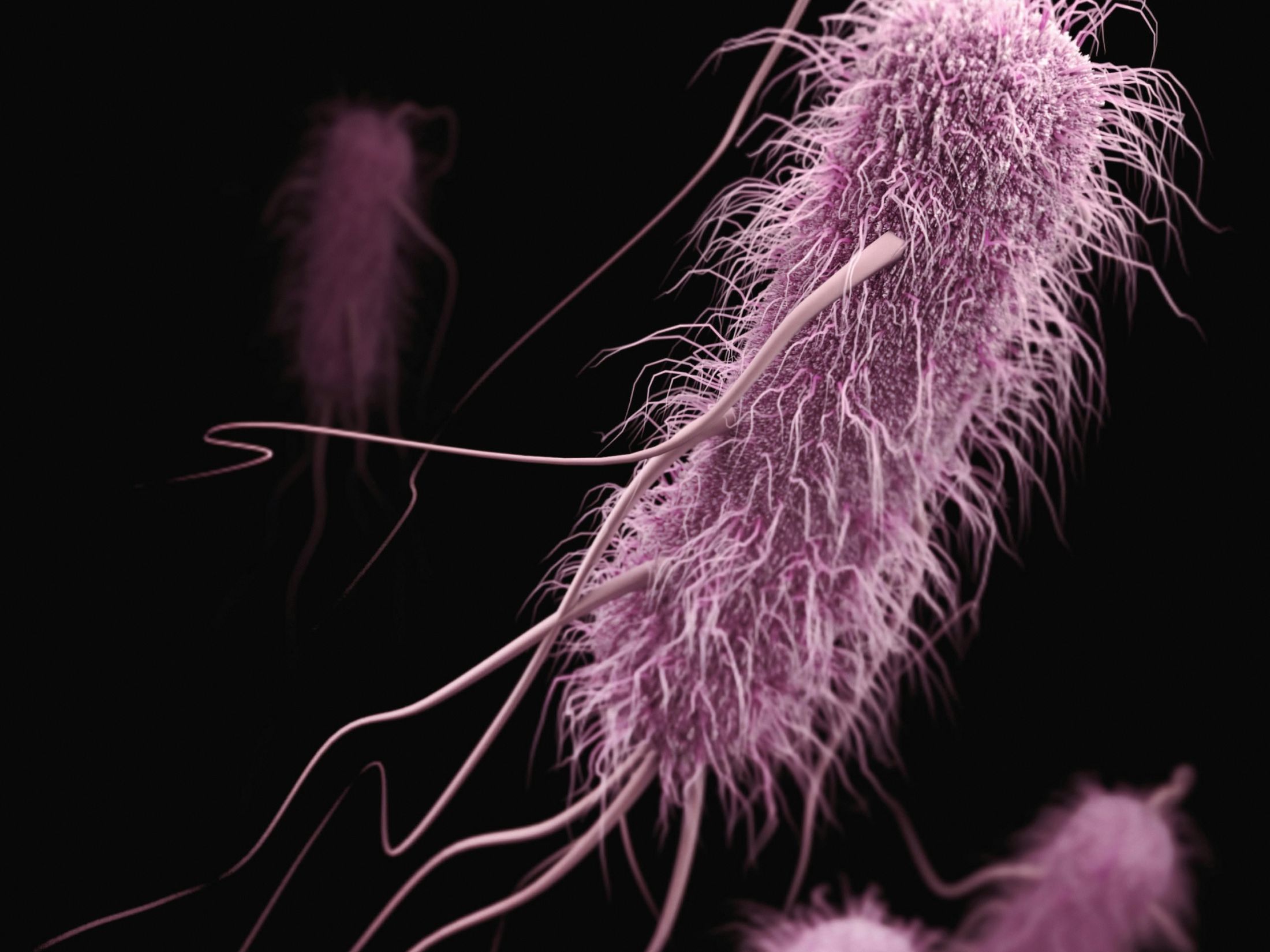

Stanford researchers have synthesised nearly 300 phages from DNA sequences produced by the Evo 2 generative AI model. Laboratory testing narrowed the group to 16 phages that showed particularly strong E. coli-killing activity.
The work centres on bacteriophage ΦX174, pronounced “FYE-ex-1-7-4”. Brian Hie, an assistant professor of chemical engineering and Dieter Schwarz Foundation Stanford Data Science Faculty Fellow, created Evo 2 with bioengineering graduate student Samuel King leading the experimental work described in the paper.
Evo 2 takes phage genomes into the laboratory
Evo 2 generates new DNA sequences from a small starting snippet of a phage genome. The researchers asked the model to produce an entire ΦX174 genome in one left-to-right pass.
“In this case, we wanted the model to generate the entire genome end-to-end in a single left-to-right pass. We didn’t add anything,” Hie said. The process generated thousands of candidate genomes before the team selected sequences for chemical synthesis and laboratory testing.

ΦX174 offered a relatively compact test system. Its genome contains fewer than 6,000 base pairs, compared with roughly 3 billion base pairs in the human genome. Hie said researchers still face a difficult task when interpreting even a 5,400-character DNA sequence gene-by-gene.
Hie said some of Evo 2’s suggested phages showed higher fitness than native ΦX174 in laboratory testing. The project therefore tests whether a model can create entire viable viral genomes, rather than only proposing local DNA edits.
Candidate screening comes before DNA synthesis
King developed a computational framework to reduce the number of candidate genomes sent for synthesis. The framework assessed traits drawn from ΦX174 and related phages before the team selected options for laboratory work.
DNA synthesis sets a practical constraint. The researchers generated genomes with Evo 2, evaluated them against their design criteria, then chemically-synthesised selected candidates and tested which genomes performed best in the lab.
“One of the main parts of the design framework was figuring out what traits the genomes should have based on ΦX174 and related phages,” King said. “The framework involved several key steps: generating genomes using Evo 2, evaluating options based on the design criteria, selecting optimal candidates, synthesising them chemically, and then testing them in the lab to see which genomes worked best.”
Hie said the framework reduced synthesis costs by concentrating spending on the candidates his team judged most viable.
This sequence also defines the operational boundary of the result. Evo 2 generated thousands of possibilities, yet the researchers still required computational evaluation, chemical synthesis, and laboratory assays to identify viable phages.
Resistance testing centres on a 16-phage mixture
The researchers selected more than one E. coli-targeting phage because bacteria can develop resistance to a single treatment. Hie said phage mixtures could make it harder for bacteria to evade every member of a treatment.
“If the bacteria gains resistance to a single phage, it’s game over for the medication,” Hie said. “But if you have multiple genetically distinct phages in a mixture, it would be harder for the bacteria to develop resistance to the entire cocktail.”
Stanford reports that a cocktail containing the 16 selected phages rapidly overcame resistance in E. coli that was immune to native ΦX174.
Hie said similar work could pursue phages aimed at methicillin-resistant Staphylococcus aureus, or MRSA. He also named Pseudomonas aeruginosa, which Stanford describes as a leading cause of medically-resistant infections acquired in hospitals.
Open-source access extends the research programme
Hie has released Evo 2 as open-source software. Researchers can download the model and use it to design genomes.
The release has raised safety and security discussions, according to Stanford’s account. Hie acknowledged that bad actors could modify versions of the tool, though he argued that existing pathogens create a greater risk because people can access and produce them more easily.
Hie also said AI-enabled systems can support responses to naturally-occurring pandemics and provide defence options against man-made biological threats. Those views reflect his assessment of the tool’s potential uses and risks.
King described the research benefit in narrower terms: “One of the most rewarding parts of this project is the creativity Evo 2 allows. New doors in science are now open because of what we can do with these models.”
The next phase will extend Evo 2 to longer and more complex DNA, according to Stanford. Hie is working with researchers at Stanford and elsewhere on additional bacteriophage designs.
Small bacterial genomes could also become a target for the model. Stanford says those genomes might support engineered microbes designed to produce chemicals, medicines, or fuels. Hie framed the remaining technical work around two questions: “The biggest open questions for me are how do we get greater genetic novelty and how do we get greater controllability of the outcomes?”
See also: Why health AI interfaces must adapt to user expertise
Want to learn more about AI and big data from industry leaders? Check out AI & Big Data Expo taking place in Amsterdam, California, and London. The comprehensive event is part of TechEx and is co-located with other leading technology events including the Cyber Security & Cloud Expo. Click here for more information.
AI News is powered by TechForge Media. Explore other upcoming enterprise technology events and webinars here.